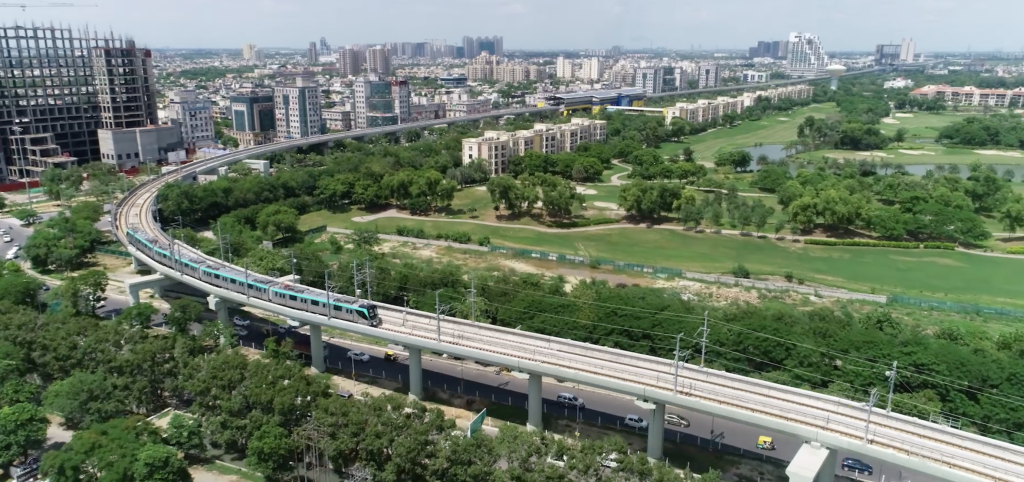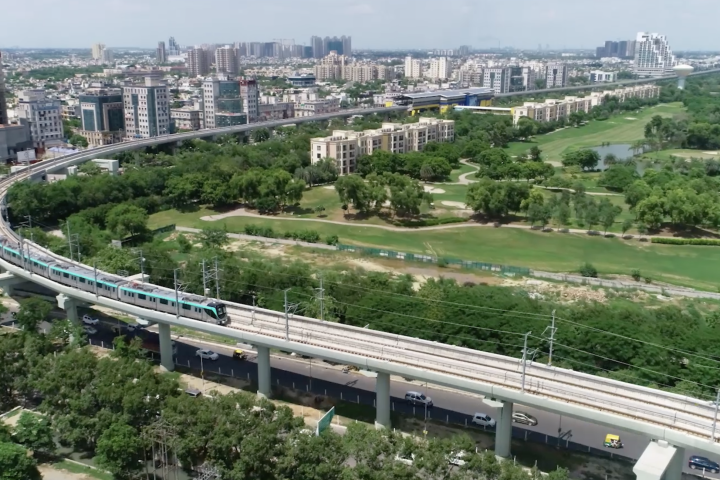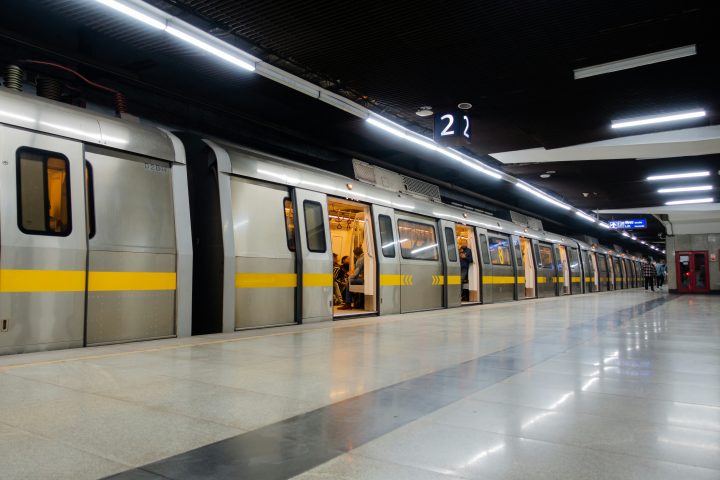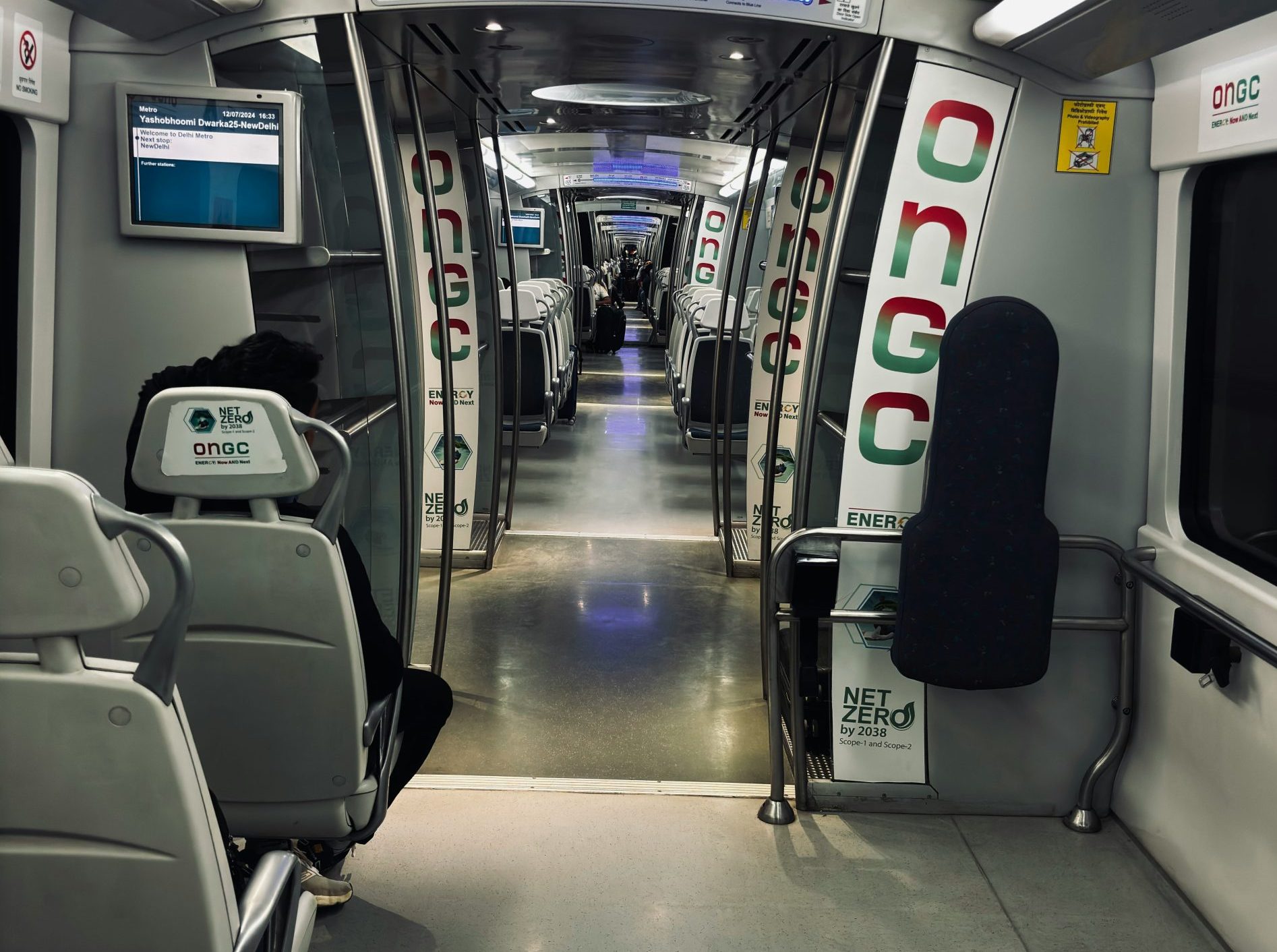
Delhi Airport Express Metro is great. It’s fast, connects the city center, has comfortable forward-facing seats, and sufficient luggage racks to store your items. It also neatly integrates with the rest of the airport infrastructure.
I remember boarding it back in its early days and being amazed by the speed, interiors, and comfort. The difference between the regular Delhi Metro coaches and this one was immediately noticeable.
A bit of history
Back in the early 2000s, Delhi airport was growing in passenger volume every year, the Commonwealth Games were only a few years away, and a large influx of people was expected during the event. So the city needed a fast mass transit mode to connect its shiny new T3 terminal with the city center.
That’s when the Airport Express corridor was envisioned, which could take people from one end to the other in just 18 minutes! But DMRC, which had already built a couple of operational lines by then, decided to do something different for this new line: a Public-Private Partnership.
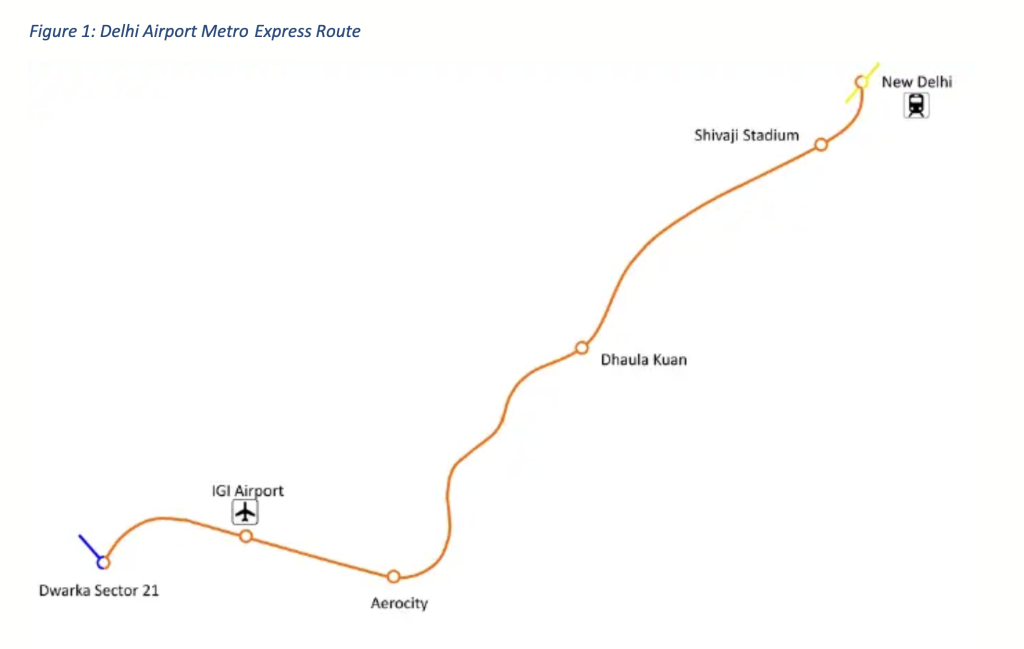
The route was built at a projected ridership of 46000 post launch, and an eventual increase to about 96000 in 10 years. A new Special Purpose Vehicle (SPV) was formed called Delhi Airport Metro Express Private Ltd (DAMEPL), consisting of Reliance Infrastructure Ltd and Spain’s Construcciones y Auxiliar de Ferrocarriles (CAF), after they won the bidding.
The corridor used a ballastless track design to allow higher speeds of 135 kmph. But delays in construction meant it missed the Commonwealth Games deadline, eventually opening operations in February 2011. For the next two years, ridership was abysmal due to poor connectivity, defects, and inaccessible stations.
The situation became worse as DAMEPL sold its stake to the Anil Dhirubhai Ambani Group, and DMRC was reportedly left uninformed. The slugfest between the two agencies continued for several more months over various issues, and eventually, DMRC took over operations in July 2013
… and then things changed
Ridership shot up 28% in a year as headway was reduced from 15 min to 10 min, and speed was increased to 80 kmph from 70 kmph. Feeder buses and station improvements also contributed to this growth. Operating costs were also brought down over the next couple of years to improve the agency’s financial situation.
In 2016, the line started integrating with the rest of the metro network, and fares were reduced to encourage passengers using the Blue Line, which was witnessing overcrowding, to use the Airport Express instead.
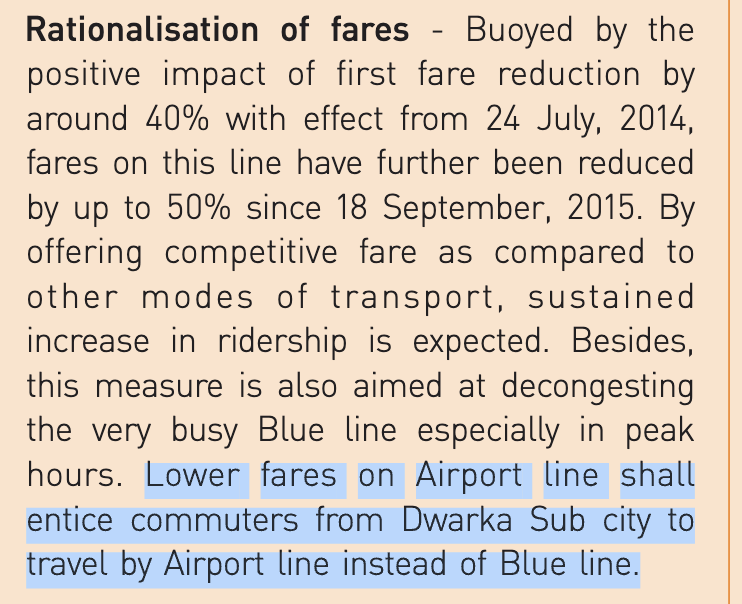
This was the first time the Airport Express was attempting to blend in with the rest of the network. DMRC also integrated the ticketing system of the Airport Express Line with other lines, relieving commuters of the hassle of carrying separate cards. The ridership continued to soar. In 2023, DMRC launched the short 2 km extension from Dwarka Sector 21 to Yashobhoomi Dwarka Sector 25.
Although the speed was now increased to 120 kmph, the electricity cost had increased exponentially, and the agency operated trains at 120 kmph only during peak periods.
The airport corridor never really made a profit, despite record footfall and integration with the rest of the metro network. Even today, it is barely breaking even, but it’s good to see that it can at least cover its operational costs.
DMRC doesn’t really offer a separate financial statement for the Airport Express anymore, unlike a few years ago. To me, this is an indication that the corridor has been fully absorbed into the rest of its network.
Why not a regular metro
The Delhi Airport Metro was conceptualized as a standalone corridor right from the onset, with the initial plan calling for fewer stations than the line has today. The idea was to create a fast, dedicated connection between the airport and the city, rather than another conventional metro line. The snippet from the DPR below highlights the intended purpose of the system.
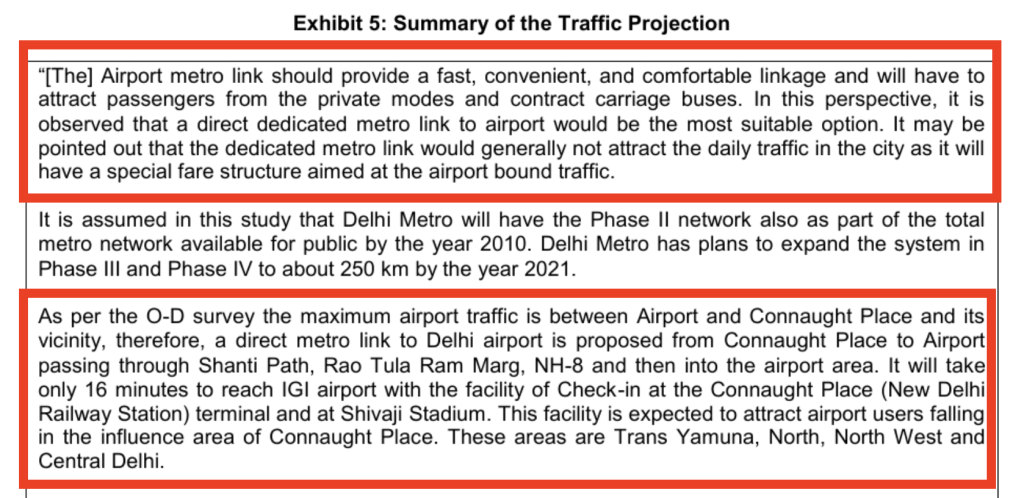
The line was also envisioned as the primary connector between India’s railway and aviation systems, facilitating easy access to the airport for rail passengers and vice versa.
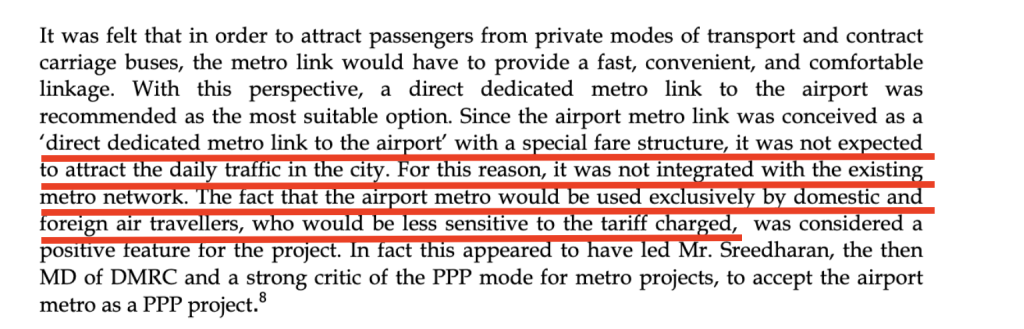
A study by IIM-A highlights the additional challenges DMRC faced: the project was expensive to build and operate, while its exclusivity meant the operator had to rely heavily on non-fare revenue.
The corridor was inspired by Hong Kong’s Airport Express, with MTR Corporation serving as a major consultant on the project. This also explains DMRC’s emphasis on non-fare revenue, as MTR is known for its model of keeping fares relatively low while generating significant revenue from other sources.
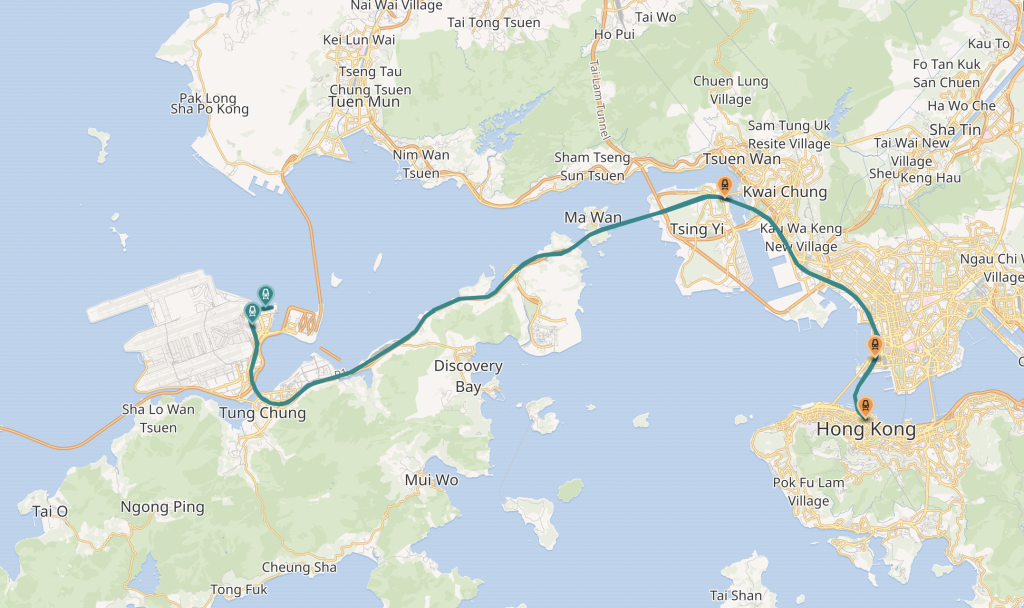
Look closer, and you’ll find a lot of similarities between Delhi and Hong Kong’s systems: fewer stops, higher speeds, similar interior layouts, and tight integration with airport services.
Hong Kong’s Airport Express makes more sense as a dedicated airport service because of the geography and the location of the airport. It sits well outside the main urban area, on Lantau Island, with relatively little dense development along the route.
That makes an express, limited-stop service particularly useful: its primary purpose is to move passengers quickly between the airport and the city, rather than serve the communities along the way.
Other cities are doing things differently
The thought process adopted by other Tier 1 cities in India for connecting to the airport is quite different.
To start with, there is no deadline hanging over them to deliver the line on time, unlike Delhi’s Commonwealth Games deadline. Second, the emphasis is more on coverage than speed. The airport is treated as just another station along a Metro route, rather than as the sole destination of a dedicated airport service.
The cities are also aware of the high construction and operating costs of an airport-focused line. Using similar design specifications to the rest of the Metro network makes it easier to operate and maintain, while keeping costs lower.
Another underlying factor is that cities today no longer have a single, clearly defined city center or economic hub. Economic activity is spread across multiple centers, making a fast, direct connection to one particular city center less useful.
Speed, is being addressed in simpler ways. Some lines have fewer stations, with greater spacing between them, allowing trains more room to accelerate and maintain higher speeds.
The focus is also on integrating airport lines with existing Metro corridors and other modes of transport. This allows them to tap into the wider network and bring in more passengers from Day 1, creating a network effect rather than relying solely on airport traffic.
And then, there is a conscious effort to keep fares affordable for passengers.
Mumbai
The upcoming Gold Line (Metro Line 8) is a 34.9-km high-speed corridor connecting Chhatrapati Shivaji Maharaj International Airport (CSMIA) and Navi Mumbai International Airport (NMIA). It connects both airports while also serving the areas along the route, and integrating with the existing railway network.
CIDCO, which is spearheading the project, has been quite explicit about the goals of the line.

The line will have 20 stations and is expected to also significantly decongest major routes between Mumbai and Navi Mumbai, including the Sion-Panvel highway and Atal Setu, the Sewri-to-Nhava Sheva sea link.
Bengaluru
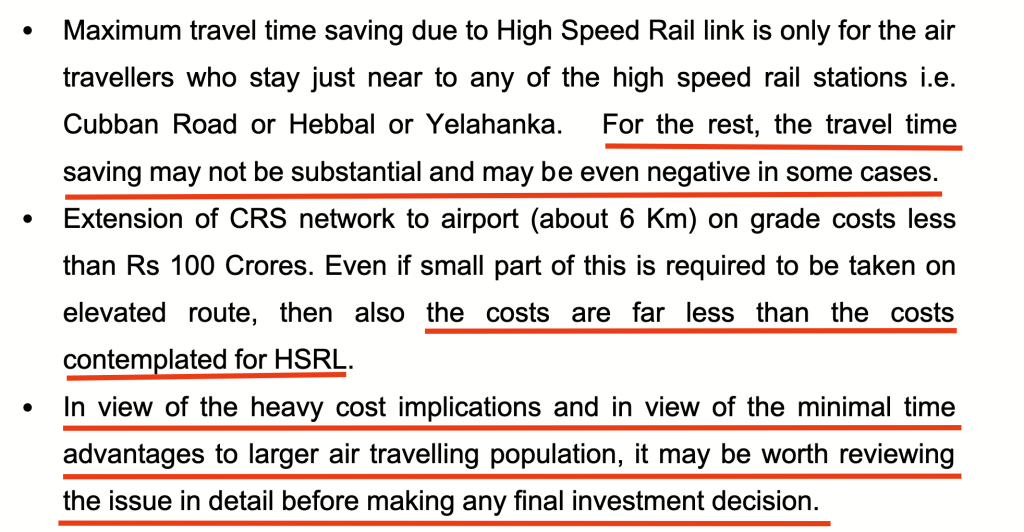
Bengaluru came pretty close to building a dedicated high-speed rail line back in 2011, but eventually settled for a regular metro line as it made more sense. The northern parts of the city were witnessing a boom, and ignoring them wasn’t prudent. A regular metro line could address connectivity to these areas while still providing a faster way to reach the airport. It was also a better utilization of funds.
RITES was pretty forthcoming in its analysis of a high-speed rail connection to the city, particularly given the need to minimize its impact on the rest of the city and the higher costs involved in building it.
The upcoming Blue Line, which is expected to be launched by the end of next year, will terminate at T2 of Bengaluru Airport. It will connect the IT hub along the Outer Ring Road in the east with the rest of the Metro network, ending at Silk Board station.
Hyderabad
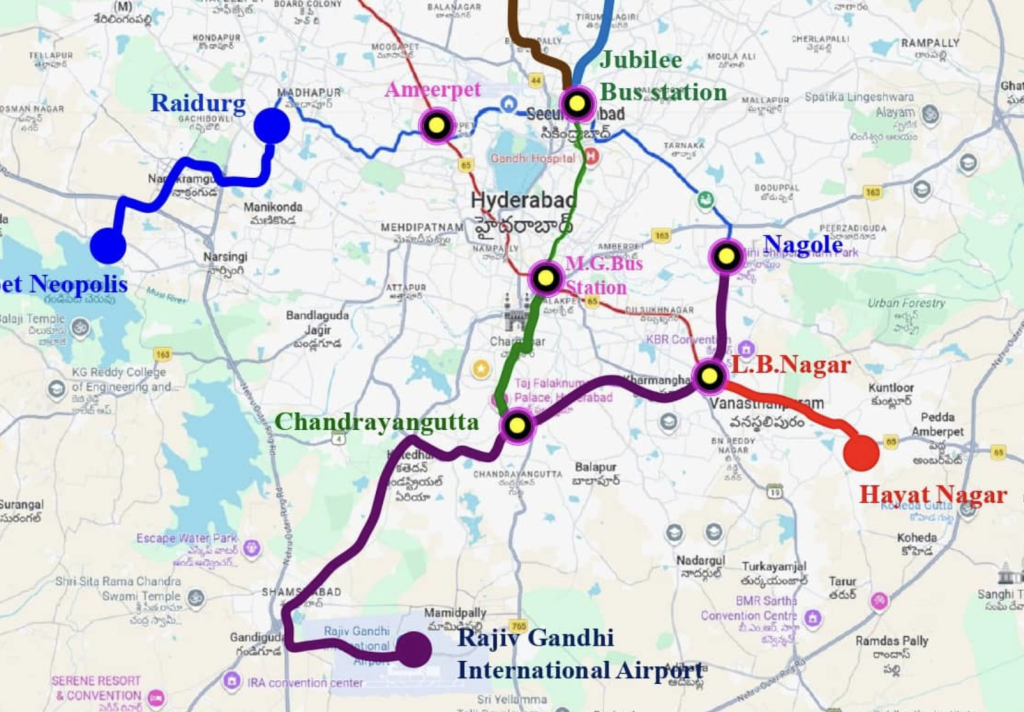
In 2023, Hyderabad Airport Metro Ltd floated tenders to design and build a dedicated 31-km Airport Metro Express, along the lines of Delhi’s Airport Express. 500 crore was also set aside for the project. Similar to Delhi and Hong Kong, passengers would have been able to check in for their flights at a Metro station, Raidurg in this case, and then board the train to the airport.
But in 2024, this plan was dropped in favour of a more conventional Metro (Corridor 4) that would pass through the older parts of the city and integrate with two other lines. It would also improve mobility in areas that lacked Metro connectivity, while being seen as a cheaper alternative.
Other cities
Chennai, Lucknow, and Ahmedabad are other examples of cities that treat the airport as just another stop along the route, or add a short branch line to connect it with the main Metro corridors.
The philosophy is simple: maximize the utility of existing infrastructure while making every rupee count.
A fair compromise
You can further categorize these airport Metro lines into two types: those that terminate at the airport, and those that treat the airport as an intermediate station. Mumbai’s current Aqua Line (Metro Line 3) falls into the latter category, while lines in Bengaluru, Ahmedabad, Hyderabad, and others belong to the former.
These airport-terminal lines also offer facilities such as baggage-screening systems, baggage-drop facilities, and check-in counters. Their coaches also have dedicated luggage racks for air passengers, although this takes up some space and reduces passenger capacity.
For air travelers, the experience can be slightly less convenient, with less luggage space, slower speeds, and the possibility of overcrowding during peak hours. But that may be a small compromise for the greater good.
Alternative modes are emerging
There are some new kids on the block that could take pressure off existing modes and reduce the need for a dedicated high-speed airport express line.
High-speed rail(HSR) lines are locating their stations at or near airports, offering faster travel at a higher cost for those who need it. Take, for example, the proposed Hyderabad–Bengaluru high-speed rail corridor, which is expected to stop near the airport.
The airport Metro station is already part of the planned multi-modal transport hub, and the high-speed train will most likely be integrated with it. The same applies to the Mumbai–Hyderabad corridor, which is expected to have Navi Mumbai Airport as an intermediate stop, giving Mumbaikars fast access to the brand-new airport.
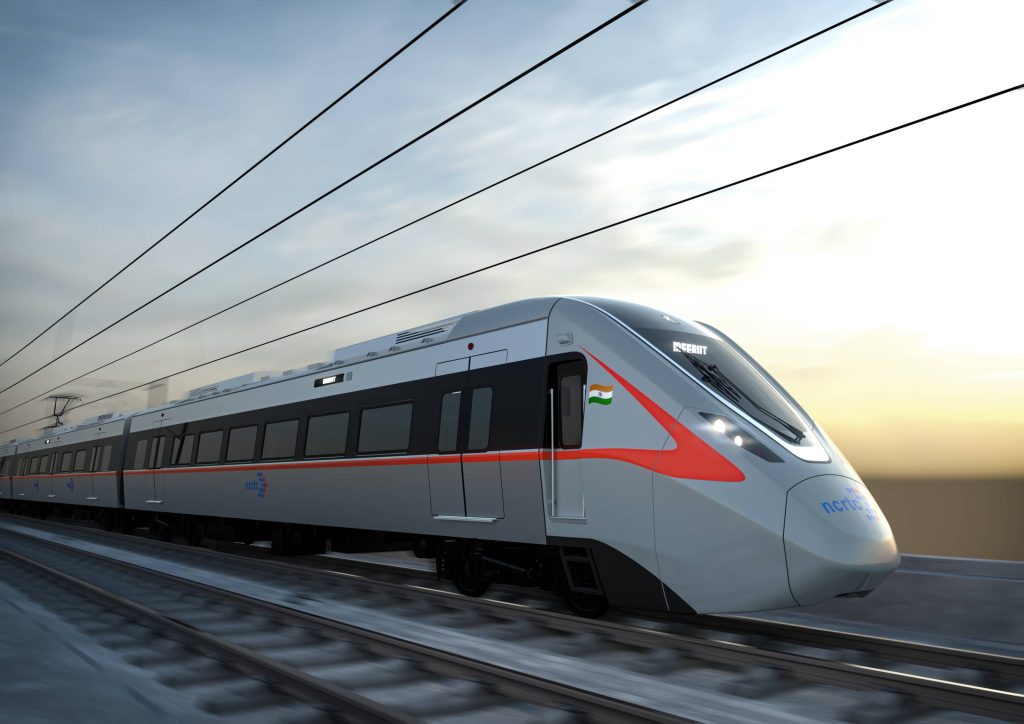
Then there is suburban rail and the Rapid Rail Transit System (RRTS) – Bengaluru’s KRIDE, for instance, could provide a faster airport connection alongside the Metro, while the proposed RRTS connection to Noida International Airport would also serve the wider Noida region.
Navi Mumbai and Kochi airports are also exploring water metro services as part of a larger transit ecosystem, connecting the airports with major points across the city.
Delhi Airport Express Metro is evolving
What started as a standalone airport corridor is now being considered for an extension into Gurugram by the Haryana government, allowing residents to get quick access to both the airport and Delhi’s city center. In many ways, this could turn the Airport Express into a kind of lite-RRTS. There are also two other proposals on the table, including one to extend the Blue Line to Gurugram.
The Airport Express was originally designed as an expensive, premium railway focused on airport passengers. But DMRC eventually made its operations roughly viable by transforming it into a high-ridership urban corridor. Delhi’s experience is therefore a little ironic.
Dedicated airport express lines are expensive to build and operate, while offering limited benefits to the rest of the city’s residents. In a recent interview, Metro Man E. Sreedharan argued that KMRL should drop its proposed Metro connection to the Kochi airport and consider alternatives such as a ropeway, citing concerns over the project’s financial viability.
Delhi Airport Express Metro is no doubt unique and leaves behind a great legacy, but it will most likely be the last of its kind in the country.