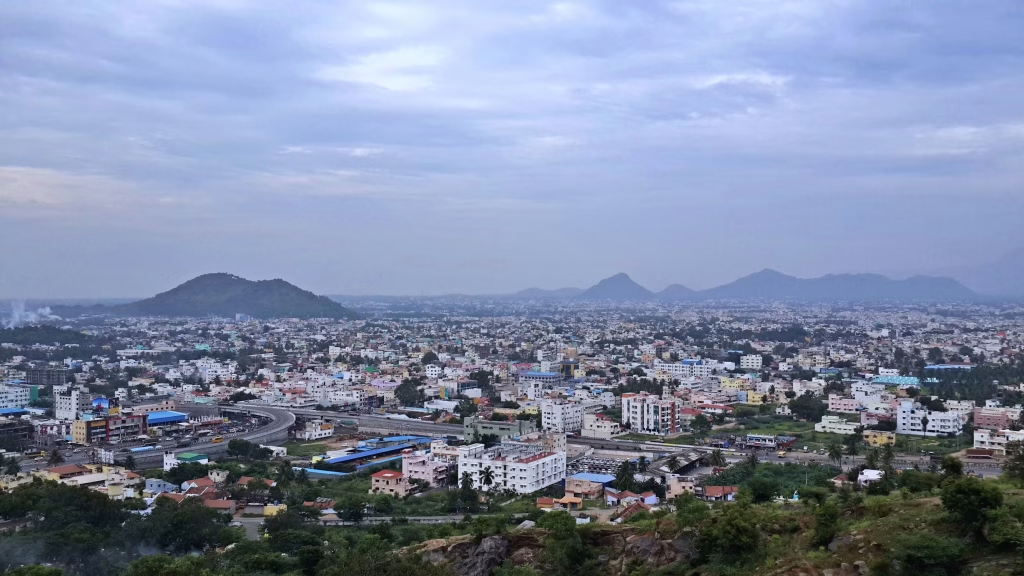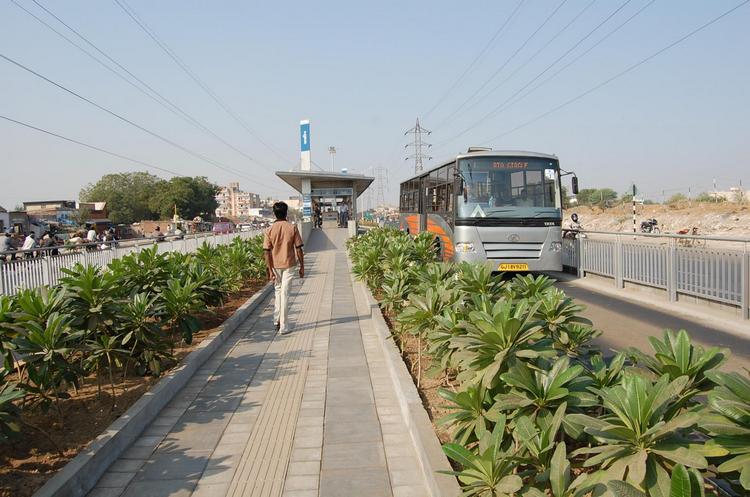
Ahmedabad’s Janmarg has undergone a significant operational shift in recent years by moving away from a closed Bus Rapid Transit(BRT) model towards a more flexible, shared system.
In 2025, the city began allowing buses from the Ahmedabad Municipal Transport Service(AMTS) to operate BRT corridors on select routes. Around 90+ AMTS buses now use portions of the dedicated median lanes, stopping at BRT stations and bypassing mixed traffic. This arrangement was also experimented before.
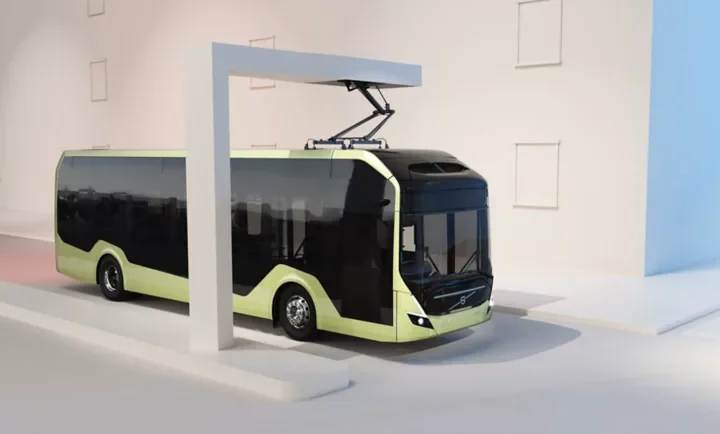
It was followed in 2026 by the approval of a large fleet augmentation, including new 12-metre electric buses for both systems. These are standard buses that can operate across both AMTS and BRT corridors. The infrastructure that was once reserved for a single system is now being opened up to serve multiple services.
Historically underserved BRT system
Like many other BRT systems in India, Ahmedabad is short of buses, rendering the corridors only partially effective.
On paper, Janmarg is not a low-capacity system. A typical 12-metre bus carries around 70–80 passengers. Under stable operations, a BRT corridor like Janmarg can handle roughly 60–100 buses per hour per direction. That translates to:
- ~4,500 passengers per hour per direction (pphpd) at the lower end
- Up to ~6,000 pphpd under more efficient conditions
Sharing the corridor reduces peak capacity
Once multiple services begin sharing the corridor, practical capacity on the busiest sections may drop to 4,500–5,000 pphpd. This is not because the corridor is physically constrained, but because of how it is operated.
The decision to allow AMTS buses into the Janmarg corridor improves utilization, but it comes with a trade-off. In a closed BRT system, buses operate in a tightly controlled pattern: similar routes, predictable headway, and consistent stopping behaviour. This allows stations to process buses quickly and efficiently, which is what ultimately determines how many passengers the corridor can carry. Once multiple services begin sharing the same corridor, this predictability breaks down.
Different routes have different passenger loads and stopping patterns. Some buses dwell longer at stations, while others clear quickly. Faster buses get delayed behind slower ones, and small variations in timing lead to bunching, where multiple buses arrive together followed by gaps.
As a result, stations remain occupied longer, and the effective number of buses that can be processed per hour drops.
Saturated and underused
This creates a structural imbalance. On high-demand stretches — particularly core sections of the corridor — passenger volumes are likely approaching the practical limit of 4,500–5,000 pphpd. Here, mixing services can lead to earlier saturation and reduced reliability.
At the same time, large parts of the network continue to operate well below capacity, especially outside peak hours, where demand may be closer to 2,000 pphpd or less.
The introduction of AMTS buses into BRT corridors is, in part, a response to this imbalance. It improves service coverage and makes better use of under utilized infrastructure, but it does not directly solve peak constraints where they matter most.
A 2019 study named “Assessing the Impact of Shift of AMTS buses on the BRTS Corridor”, which was in fact reviewed by the very people who designed BRTS network in the city found that average speeds for BRTS buses decreased by 30% to 42% across different stretches.
Travel times also increased for 24% of BRTS users, and 20% reported a decrease in seating availability. The frequency of buses in some sections (e.g., Sarangpur to Tilak Bagh) reached 59 buses per hour, exceeding the design capacity of 45 buses per hour, leading to congestion.
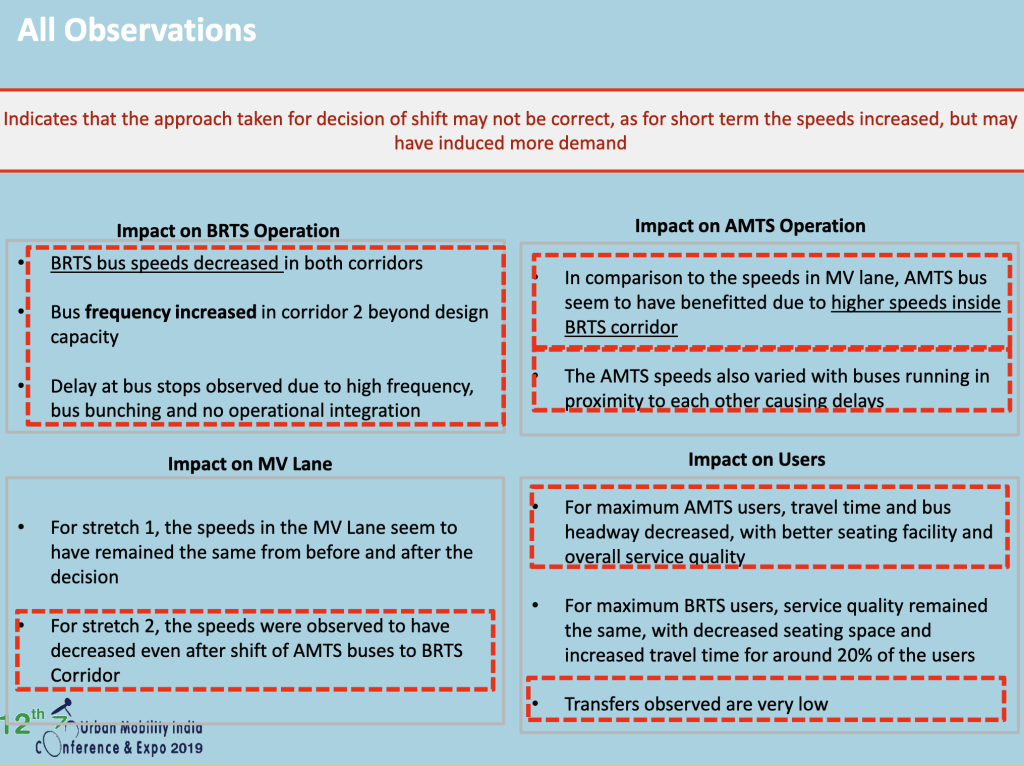
Lack of integration between AMTS and Janmarg meant caused multiple buses to arrive at once, leading to queueing delays of 45–80 seconds. However, AMTS buses saw a significant increase in speed compared to running in mixed vehicle lanes.
Integrate, not compete
A better approach would be to treat Janmarg as the trunk of the system, not just another set of lanes. High-frequency BRT services should dominate the core corridor, especially on peak sections where capacity is already constrained.
At the same time, AMTS should be integrated as a feeder and support network, with only limited and carefully selected routes entering the corridor.
This is broadly how successful systems like Bogotá and Jakarta operate — not through strict separation, but through a clear hierarchy of services. Without such structure, shared corridors risk becoming inefficient, with different services competing for limited station capacity rather than complementing each other.
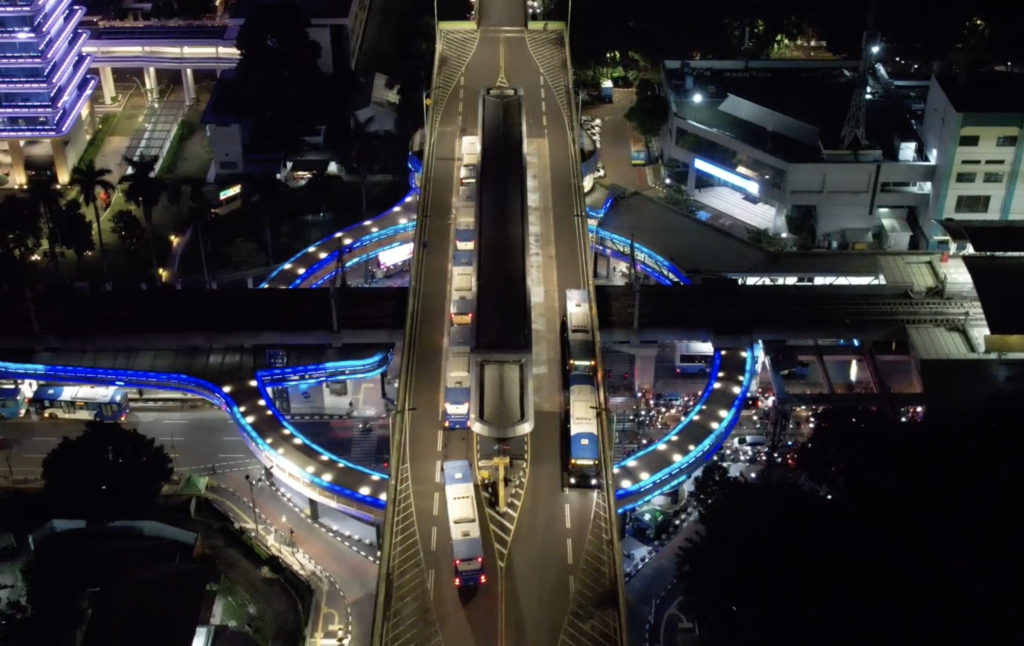
Direct services in TransJakarta are officially recognized integration routes that operate partly inside BRT corridors and partly in mixed traffic. Their purpose is to reduce transfers and extend the reach of the system, but they are tightly defined within a broader hierarchy of trunk, feeder, and integration services rather than being open access to all buses.
Header image: unfccc.int